
.png)
The digital world is evolving faster than ever, and two technologies leading this transformation are Augmented Reality (AR) and Virtual Reality (VR). From gaming and education to healthcare and shopping, these immersive technologies are revolutionizing how humans interact with digital environments.
Although AR and VR are often grouped together, they serve very different purposes. Understanding their differences is essential for businesses, developers, students, and tech enthusiasts who want to stay ahead in the digital era.
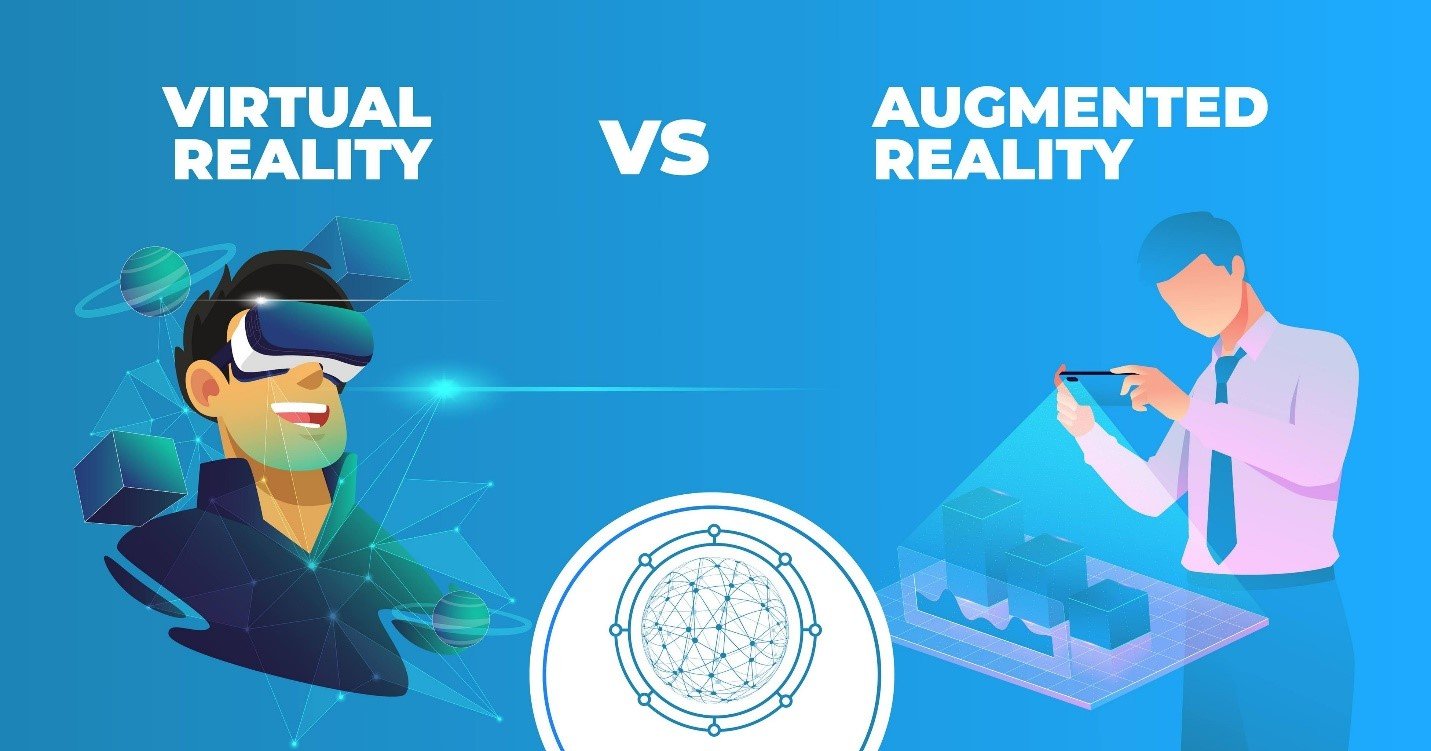
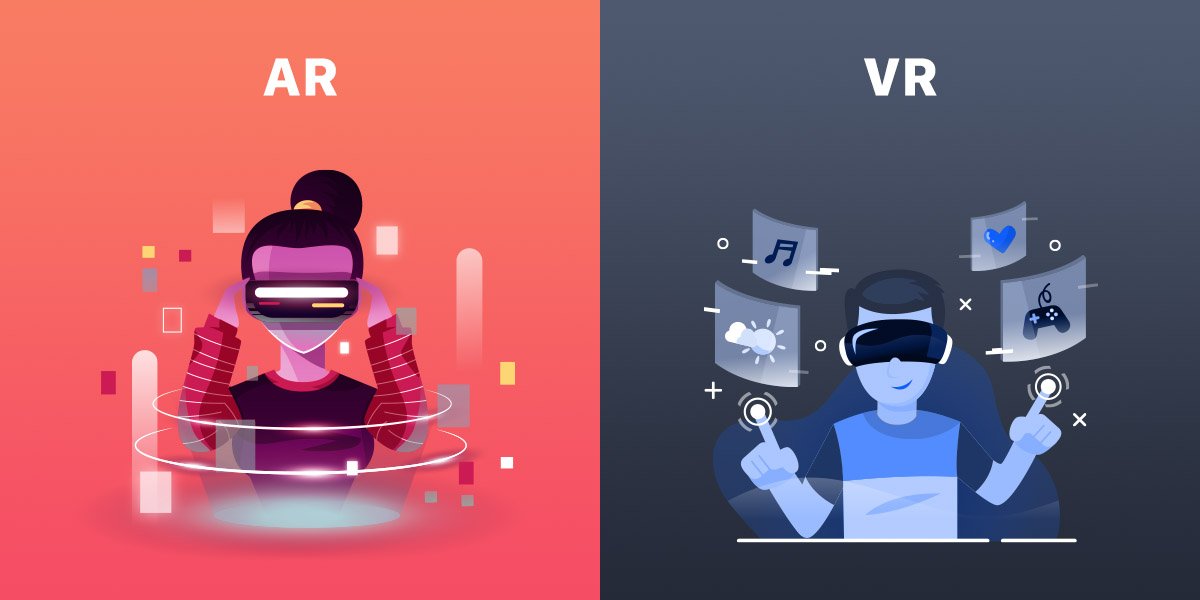
Augmented Reality overlays digital elements onto the real world. Instead of replacing reality, AR enhances it by adding interactive virtual objects, graphics, or information to a live environment.
You’ve probably already used AR without realizing it.
Examples include:
AR technology uses smartphones, tablets, or smart glasses to blend digital content with physical surroundings.
AR relies on:
The device scans the environment and places digital objects into the real world in a way that feels natural and interactive.
Virtual Reality creates a fully digital environment that completely immerses the user in a simulated world. When using VR, users wear a headset that blocks out the physical environment and replaces it with a computer-generated experience.
VR is commonly used in:
Unlike AR, VR isolates users from the real world to create a highly immersive digital experience.
| Aspect | Augmented Reality (AR) | Virtual Reality (VR) |
|---|---|---|
| Experience | Enhances the real world | Replaces the real world |
| Immersion | Partial immersion | Full immersion |
| Equipment | Smartphones, AR glasses | VR headsets and controllers |
| Environment | Real + virtual elements | Fully digital environment |
| Accessibility | More accessible | Requires advanced hardware |
| Cost | Usually lower | Often more expensive |
| Applications | Retail, navigation, social media | Gaming, simulations, training |
AR has become increasingly popular because it is easy to access through smartphones. Businesses are using AR to improve customer engagement and create interactive experiences.
Customers can virtually try clothes, makeup, or furniture before buying.
Doctors use AR for surgical guidance and medical visualization.
Students can interact with 3D models and animated lessons.
Buyers can preview properties with interactive overlays.
AR helps workers with assembly instructions and maintenance support.
VR provides deep immersion, making it ideal for simulation-based experiences.
VR gaming creates realistic interactive worlds.
Pilots, surgeons, and engineers use VR simulations for practice.
Virtual classrooms and science simulations improve learning experiences.
People can explore destinations virtually before traveling.
VR is used in mental health treatment, anxiety reduction, and rehabilitation.
Most AR applications work on smartphones.
Users stay connected with their physical surroundings.
AR devices are generally more affordable than VR equipment.
Brands use AR for marketing and customer engagement.
VR creates realistic and engaging experiences.
Ideal for training in high-risk industries.
Interactive learning improves knowledge retention.
VR gaming and storytelling feel more realistic.
Gaming is one of the biggest markets for both AR and VR.
AR games blend digital content into the real environment. Players move around physically while interacting with virtual objects.
VR gaming creates complete immersion, allowing players to feel like they are inside the game world itself.
Both technologies are reshaping the future of interactive entertainment.
Experts predict massive growth in both AR and VR over the next decade. Companies are investing heavily in immersive technologies to build the future of communication, entertainment, education, and work.
As hardware becomes more affordable and internet speeds improve, AR and VR will likely become part of everyday life.
The concept of the Metaverse combines elements of AR, VR, artificial intelligence, and blockchain to create persistent virtual worlds where users can socialize, work, shop, and play.
AR and VR are considered foundational technologies for building immersive metaverse experiences.
There is no single winner because both technologies serve different purposes.
Choose AR if you want:
Choose VR if you want:
In many cases, businesses are beginning to combine both technologies for hybrid experiences.
Augmented Reality and Virtual Reality are no longer futuristic concepts — they are actively changing industries and redefining digital interaction. AR enhances the real world with digital information, while VR creates entirely immersive virtual environments.
Both technologies have enormous potential, and their influence will continue to grow in education, healthcare, gaming, retail, and beyond.
The future of immersive technology is just beginning, and AR and VR are at the center of this digital revolution.

.png)