

The world of technology is moving toward more immersive and interactive experiences, and two innovations leading this revolution are Augmented Reality (AR) and Virtual Reality (VR). These technologies are transforming industries, improving user experiences, and changing the way people interact with digital content.
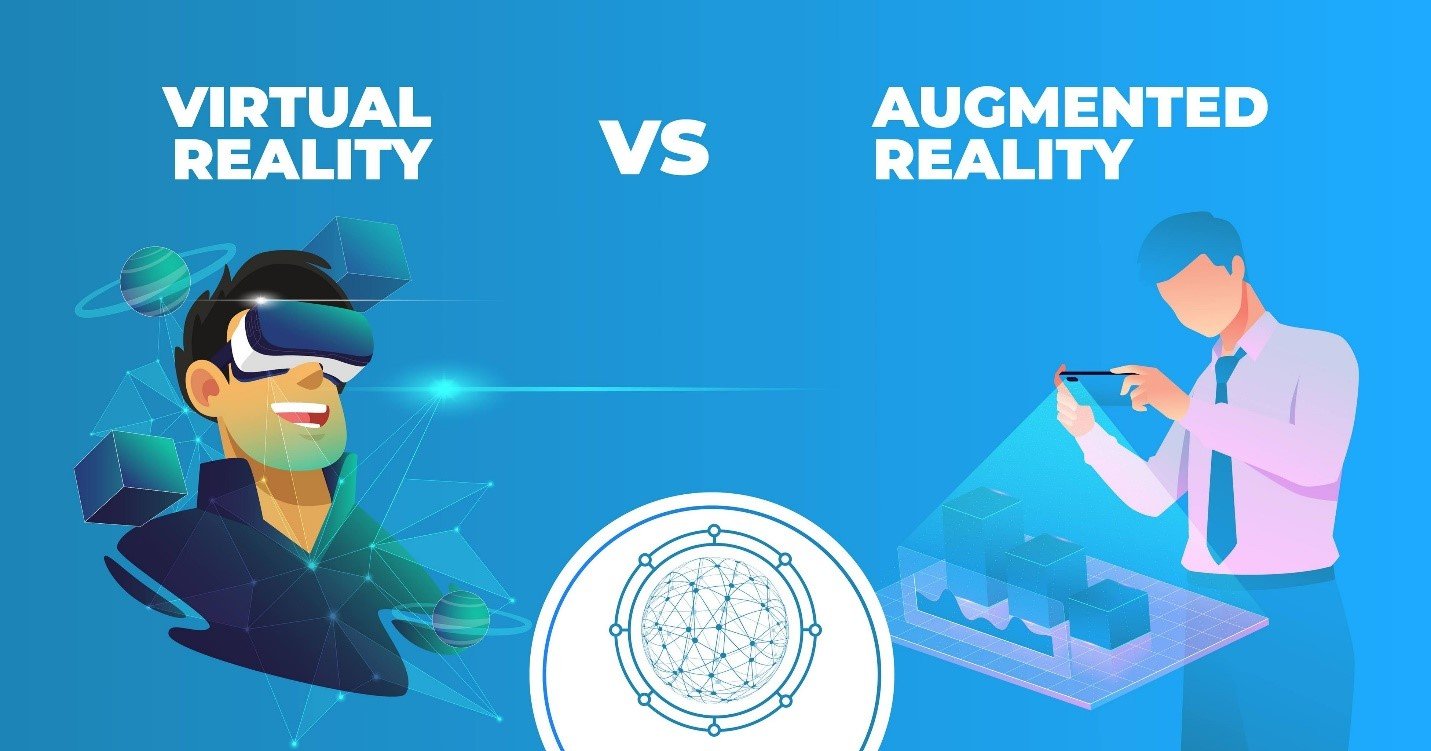
While AR and VR may sound similar, they function in completely different ways. One enhances the real world, while the other creates an entirely virtual environment.
In this blog, we’ll break down the differences, applications, advantages, and future potential of AR and VR.
Augmented Reality is a technology that overlays digital information onto the real world. AR allows users to interact with both physical and virtual elements simultaneously.
Instead of replacing reality, AR improves and enhances it.
For example:
AR technology works through devices such as:
AR uses cameras, sensors, and software to detect the environment and place digital objects in real time.
This creates an interactive experience where virtual elements appear to exist in the physical world.
Virtual Reality is a fully immersive technology that transports users into a computer-generated environment. Users wear VR headsets that block out the real world and replace it with a simulated digital experience.
VR creates the feeling of being physically present inside a virtual environment.
Examples of VR experiences include:
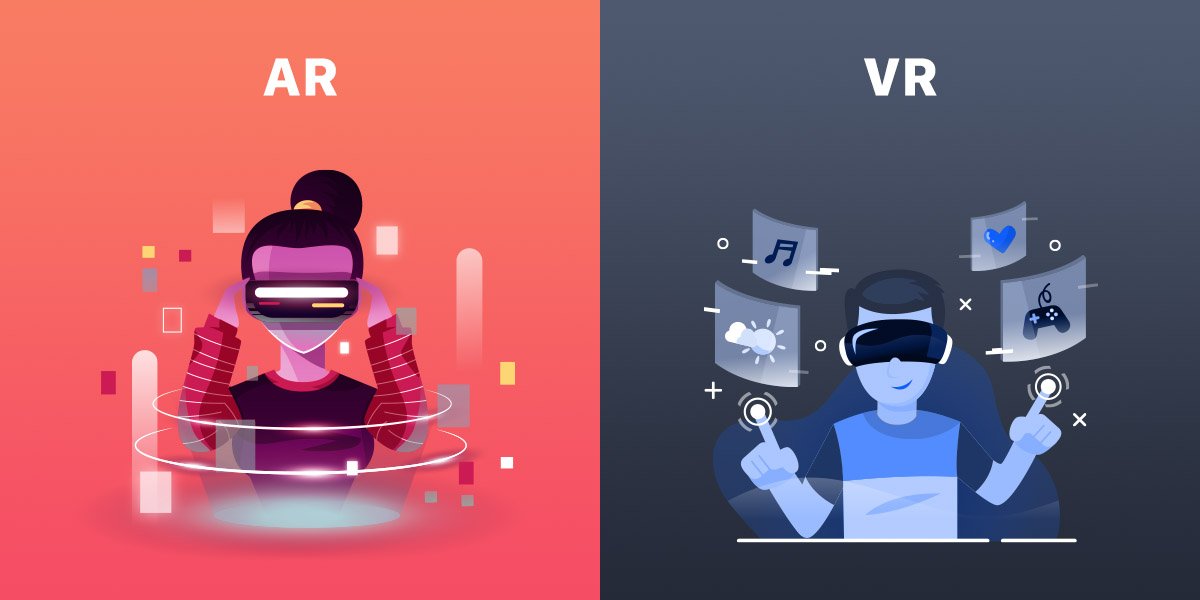
| Feature | AR (Augmented Reality) | VR (Virtual Reality) |
|---|---|---|
| Reality | Enhances the real world | Replaces the real world |
| Immersion | Partial immersion | Complete immersion |
| Equipment | Phones and AR glasses | VR headsets |
| User Experience | Interactive real-world enhancement | Fully virtual interaction |
| Accessibility | More accessible | Requires specialized hardware |
AR helps customers visualize products before buying. Users can try on clothes, preview furniture, or test cosmetics virtually.
Medical professionals use AR during surgeries and training to improve accuracy and efficiency.
Students can interact with 3D models and visual learning tools that make education more engaging.
AR displays navigation and driving information directly on vehicle windshields.
Designers use AR to present building models and interior layouts in real environments.
VR gaming creates highly immersive experiences that place players directly inside the game world.
Pilots, military personnel, and healthcare workers use VR for safe training simulations.
Virtual travel experiences allow users to explore destinations remotely.
Companies use VR meeting spaces for remote teamwork and virtual conferences.
VR assists patients with mental health treatment, physical therapy, and stress management.
AR and VR are expected to become major parts of future digital ecosystems. As technology improves, these tools will become more affordable, lightweight, and accessible.
Future trends may include:
Businesses across industries are investing heavily in immersive technologies to improve communication, training, and customer experiences.
There is no clear winner between AR and VR because both technologies serve different purposes.
Choose AR if you want:
Choose VR if you want:
Both technologies will continue evolving and may even work together in the future.
AR and VR are revolutionizing the digital landscape by creating more engaging and interactive experiences. AR enhances reality with digital elements, while VR creates fully immersive virtual environments.
From healthcare and education to gaming and business, these technologies are shaping the future of innovation. As adoption continues to grow, AR and VR will redefine how people learn, work, shop, and connect in the digital age.

.png)